



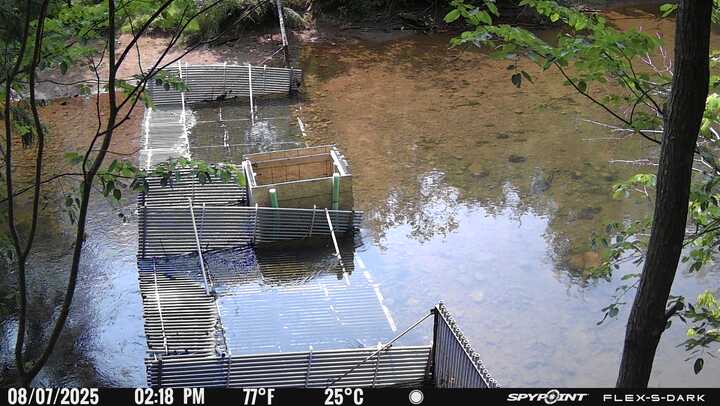
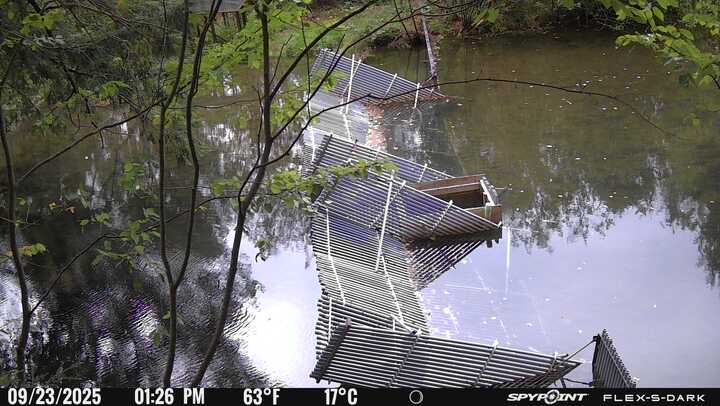
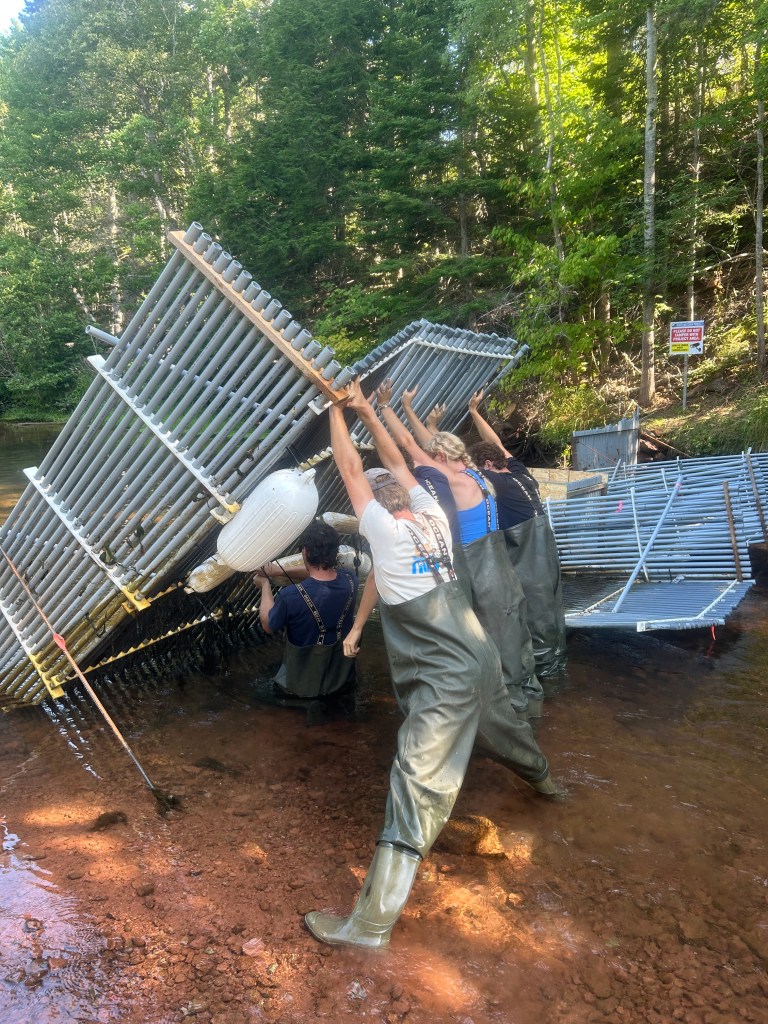
In 2025, CQWF launched a major initiative to address a long-overlooked gap in ecological research: fish population estimates on Prince Edward Island, which hadn’t been studied in depth since 1991. We proposed the project in early fall of the previous year and were fortunate to secure funding through the Watershed Alliance—without their support, this project wouldn’t have been possible. It stands as one of the most significant undertakings by a watershed group in the region, and CQWF is proud to lead the effort.
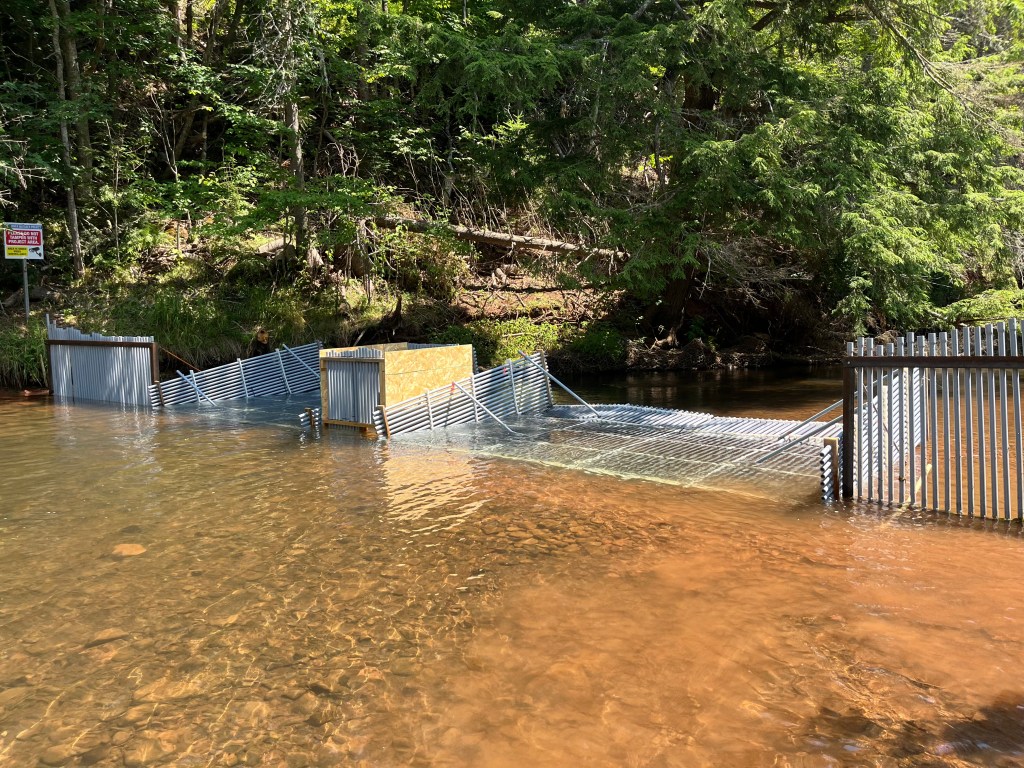
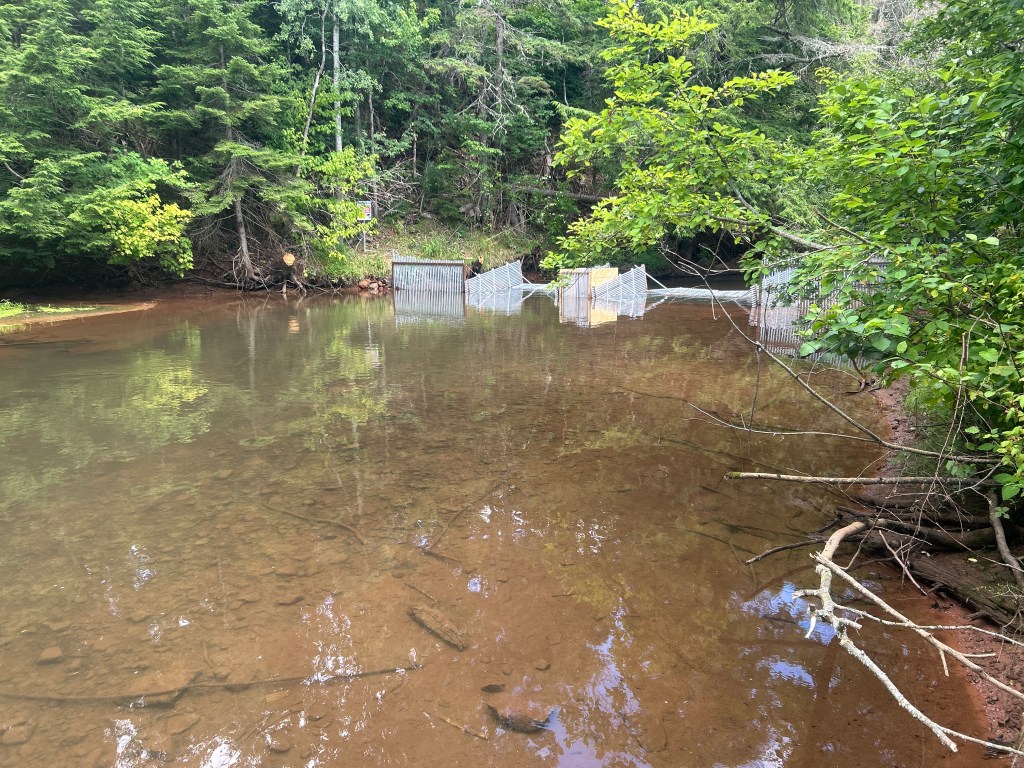
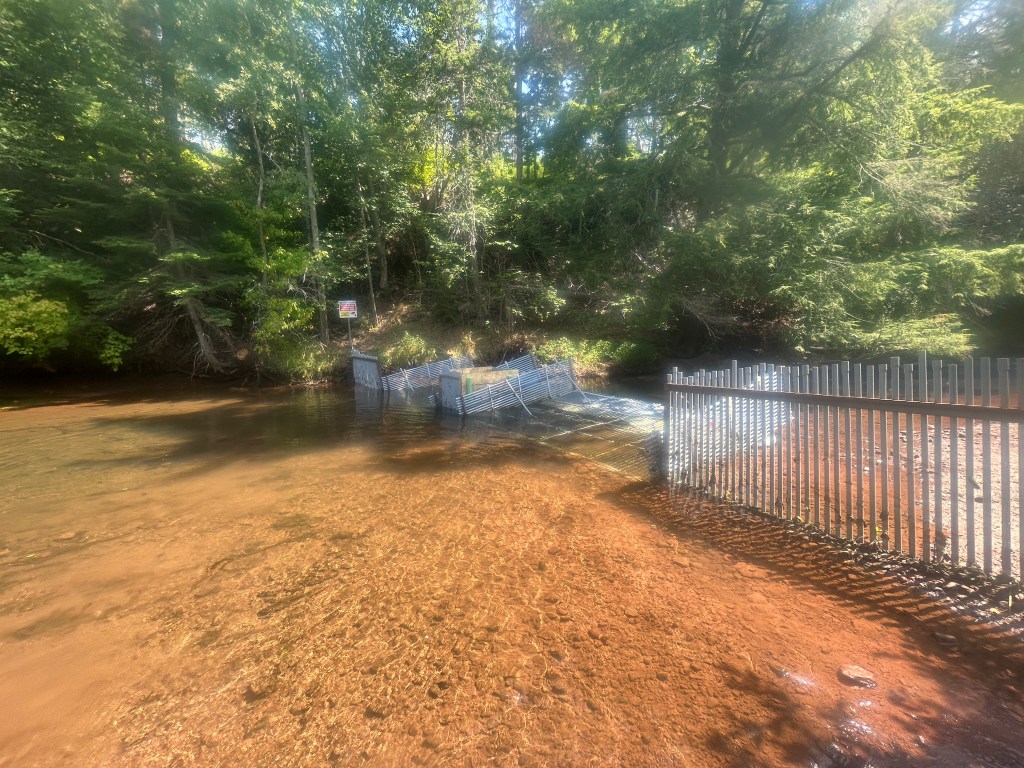
We completed the installation of the RiverWatcher in early July, and it has been running continuously since then. This project has demanded extensive collaboration, creative problem-solving, and adaptability. We’re incredibly grateful to our dedicated summer crew and the many others who contributed their time and expertise to help bring it to life.
We have had a lot of support on our journey and would like to thank the following
- Prince Edward Island Watershed Alliance
- Atlantic Salmon Federation
- Department of Fisheries and Ocean
- Forest’s Fish and Wildlife division of PEI Dept. of Environment, Energy & Climate Action
- Morell River Management Cooperative & Mooney’s Pond Centre
- Canadian Rivers Institute and University of New Brunswick
Primary Goals
Determine migratory population of brook trout, Atlantic salmon and rainbow trout
- Will also provide insight into timing of migration upstream and downstream
- Determine species composition of the brood stock population
Incorporate data from the return adult counts in the UPEI saprolegnia study to assist in determining disease prevalence in adult population and condition of adult fish as they enter the freshwater environment via camera counting setup without having to handle the fish.
- This will play a vital role in the development of a major thesis chapter. It was learned in 2024 that an important factor in determining disease prevalence is knowing the broodstock population. UPEI PhD candidate Eleanor Glahn will analyze the counting fence data for 2025&26.
Revisit 1991 Dupuis results regarding salmon population characteristics that formed the foundation for our PEI model used to relate the number of redds to egg deposition.
- Several assumptions are key in calculating egg deposition rates and will be revisited. These include the ratio of male to female, and ratio of large versus small salmon.
- Along with populations status of Atlantic salmon the number/size of adult brook trout and rainbow will be compared to the 1991 study results for population comparison (eg- 1991 brook trout population versus 2025)
Provide a baseline population stock assessment pre Brookvale hatchery renovations to determine the overall relevance to the fish community. Will return to the West River in several years (~8 years) to determine population trend response to post renovations. This assessment should be considered in the Environmental Impact Assessment for the hatchery renovations.
Additional Goals (TBD if possible)
- Smelt and gaspereaux population estimate
- Out going smolt production
- Presence of brown trout, striped bass in freshwater, and river otters
- Environmental conditions related to upstream and downstream movement (West River have a hydrometric station)
Data management: CQWF performed daily maintenance that consisted of checking the fence daily and removing debris, adjusting during extreme flood events, and downloading the data weekly. Data analysis is simple for our project design, essentially tallying the total number of returning adults, run timing, condition of fish (based on camera footage review), and reviewing videos to determine species identification. This can be done anytime throughout the work season and is expected to happen as the data is downloaded weekly. Results will be presented in a similar fashion as the Dupuis 1991 study.
- Data is automatically compiled and summarized into spreadsheets making data storage, management, and sharing effortless.
- CQWF project goals are simple and will not require in depth statistical analysis. Anything that will be used in DFO stock assessment and methodology revisions will need to be done so by DFO
- Per 24 h period with 100 detections takes about 15 min of review. 1 week with 700 detections will take less than 2hr to review (Haas et al 2024). Not a significant amount of time required.
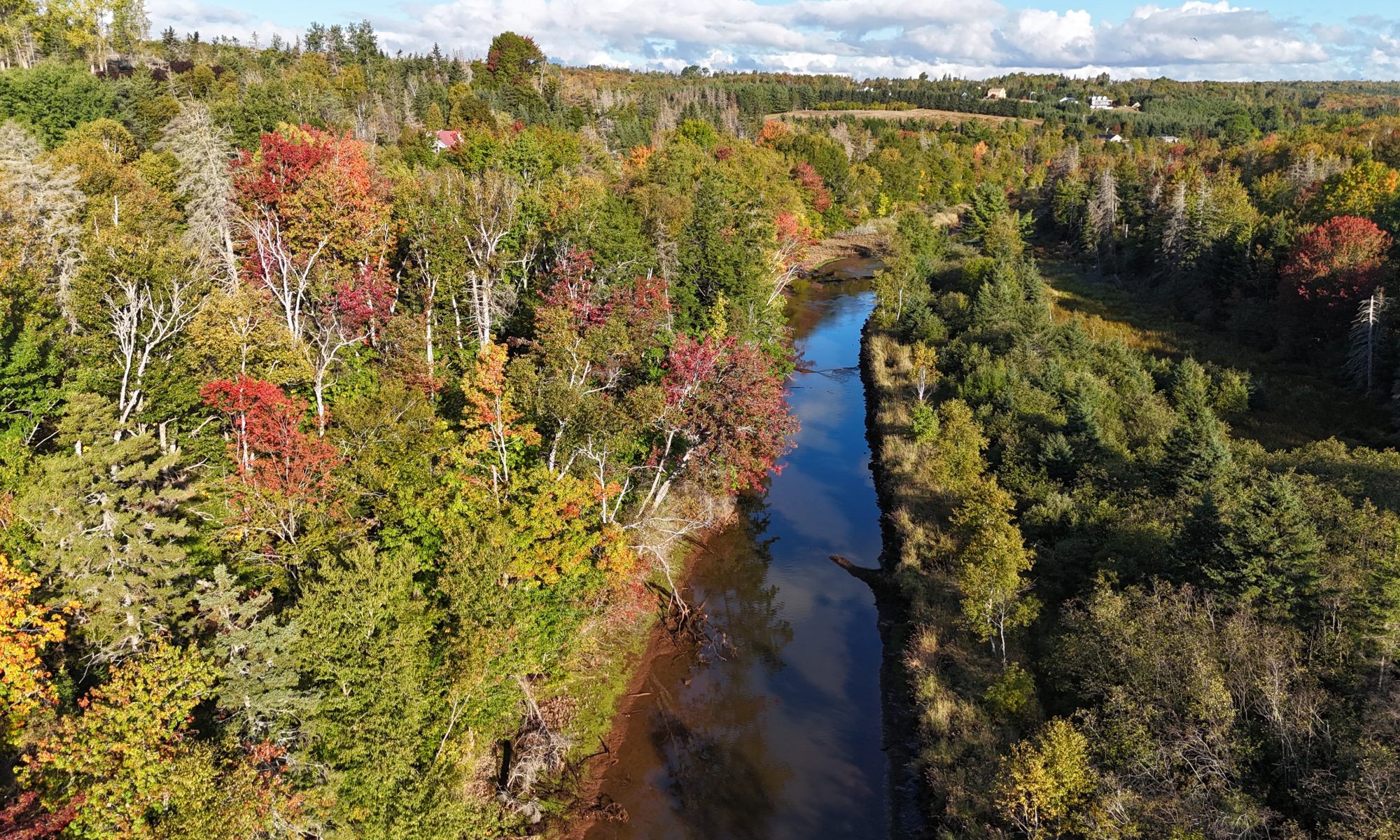
West River is an ideal river to begin conducting complete stock assessments on
- It was the original calibration river for relating the number of redds to the number of female Atlantic salmon and would be ideal to revisit this study. The West River also has one of the best datasets for counting redds with suitable river conditions/characteristics.
- With the ongoing situation with Saprolegnia on the West River now is the ideal time to do a stock assessment to help determine the impact of hatchery renovations. How else do the regulators plan on assessing the level of impact these renovations on the Brookvale hatchery will have on the local stock population?
- This data will also play a major component in the overall Phd study as it is difficult to determine disease prevalence without knowing the adult population status
| Species | Upstream Count | Downstream Count |
| Brook trout | 68 | 180 |
| Rainbow trout | 131 | 131 |
| Atlantic salmon | 10 | 13 |
| Striped bass | 143 | 155 |
| American eel | 1 | 4 |
| Aquatic mammals | 284 | 346 |
| Brown trout | 0 | 3 |
| Stickleback | 3 | 2 |
| Herring/Alewife | 0 | 1 |
| Infected fish (Saprolegnia) | 2 | 8 |
| Atlantic tomcod | 10 | 21 |
| Rainbow smelt | 2 | 5 |
 Central Queens Branch of the PEI Wildlife Federation