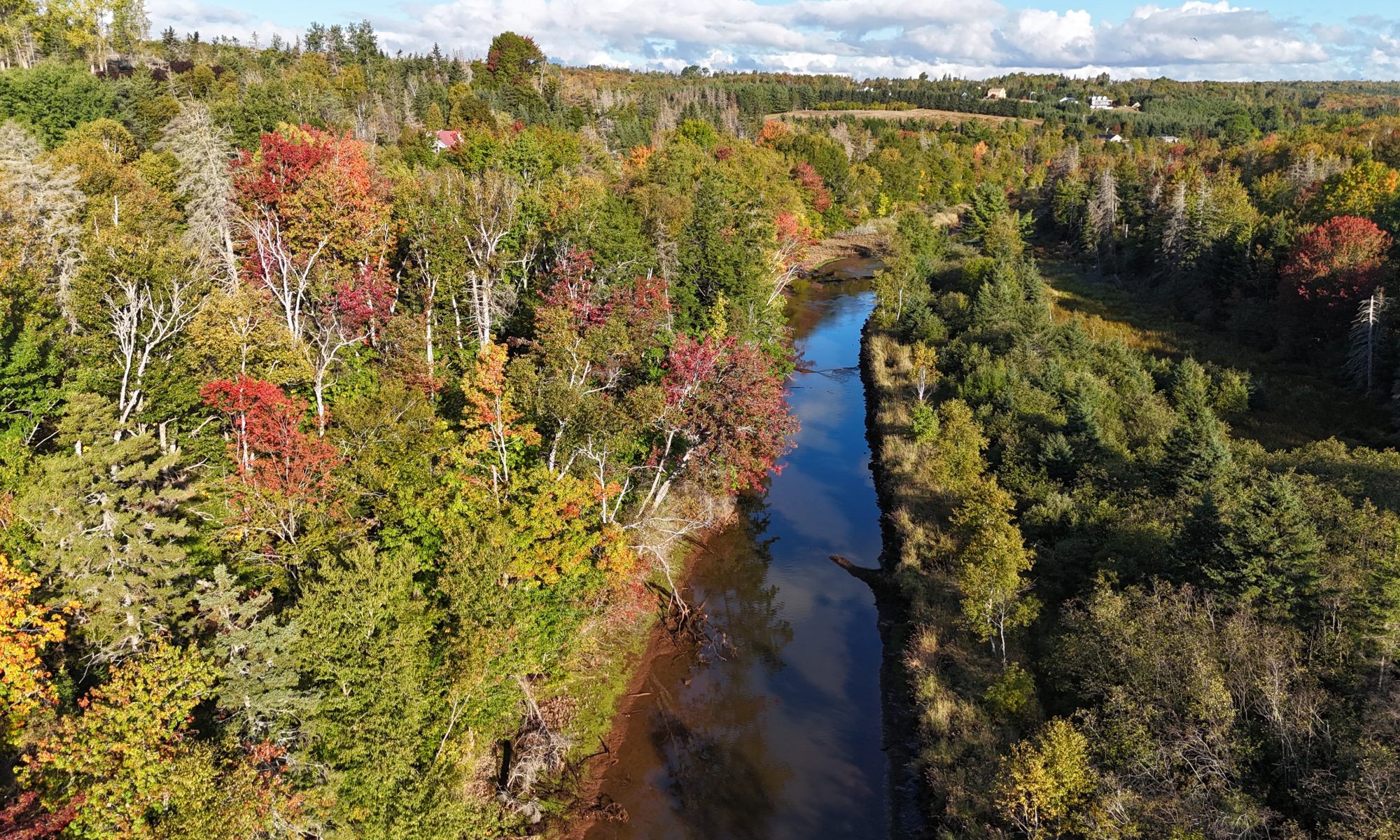

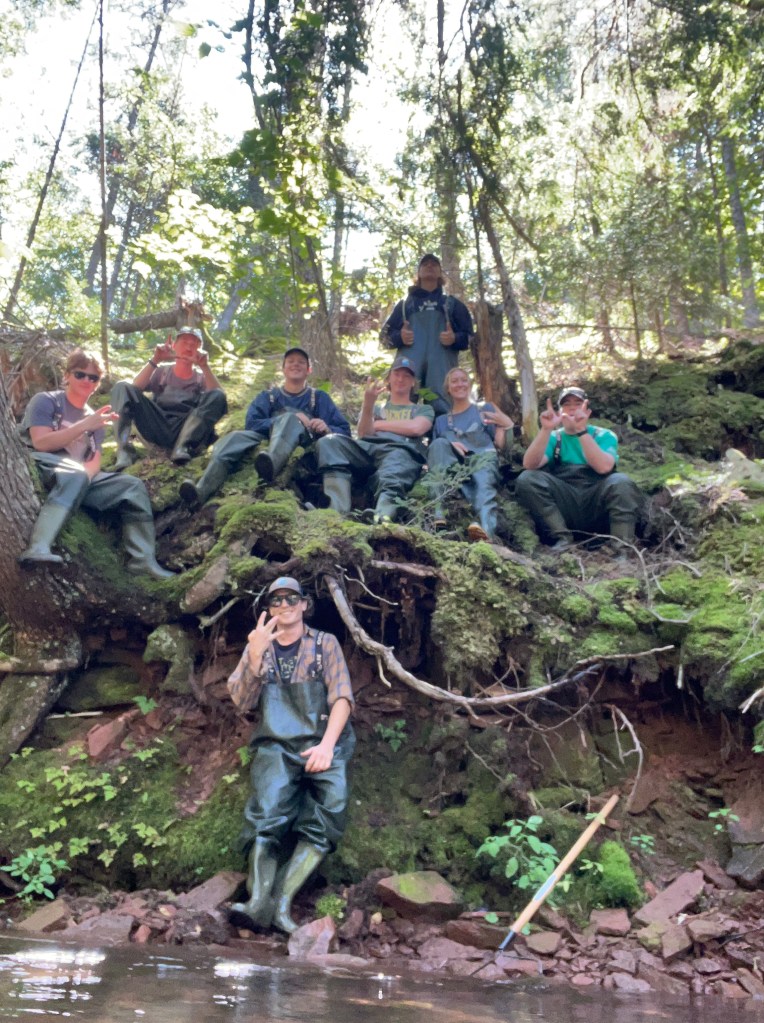
The Central Queens Branch of the PEI Wildlife Federation (CQWF) had a productive work season in 2023, even with the extra workload due to Hurricane Fiona our crew still managed to persevere!
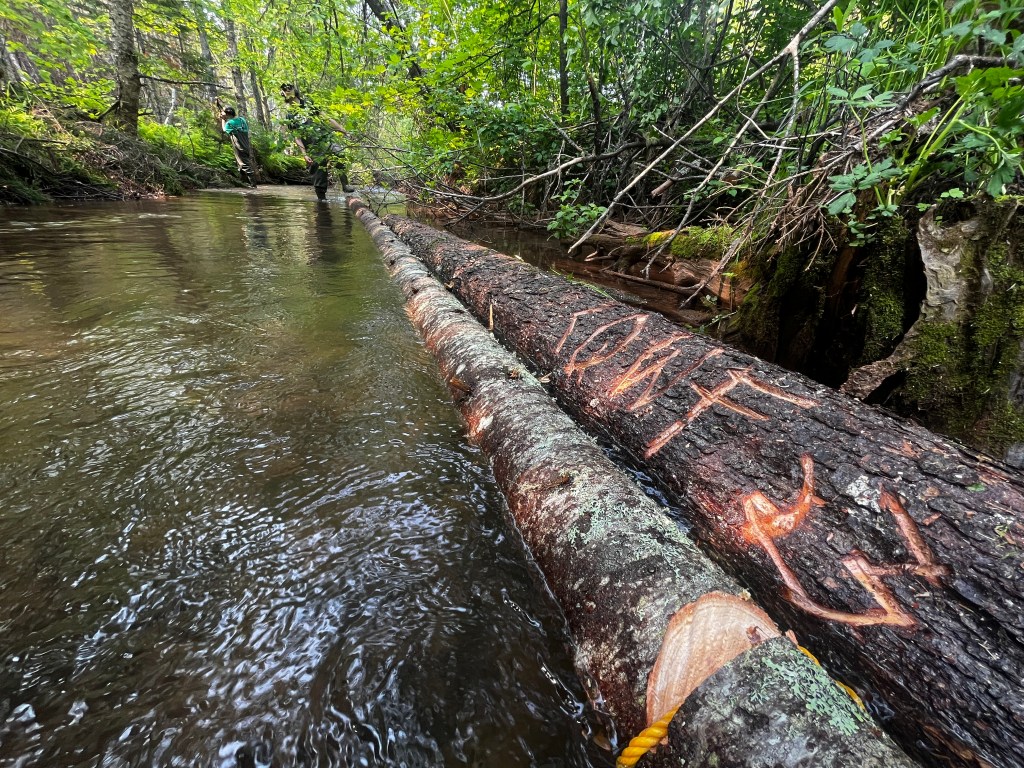
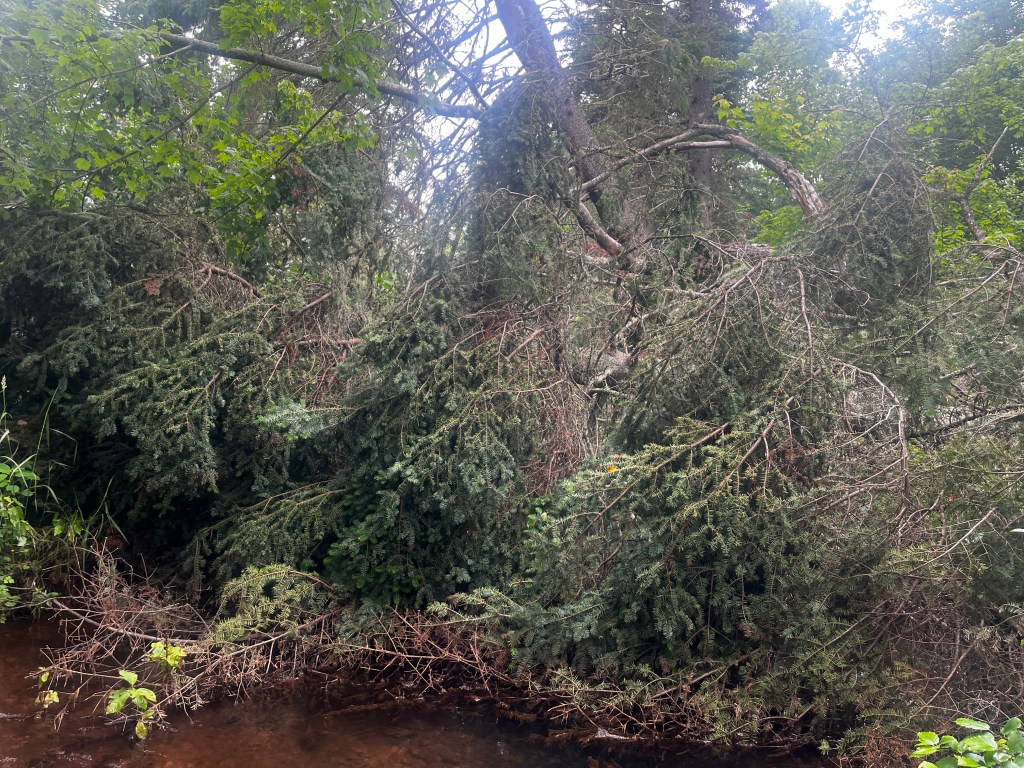
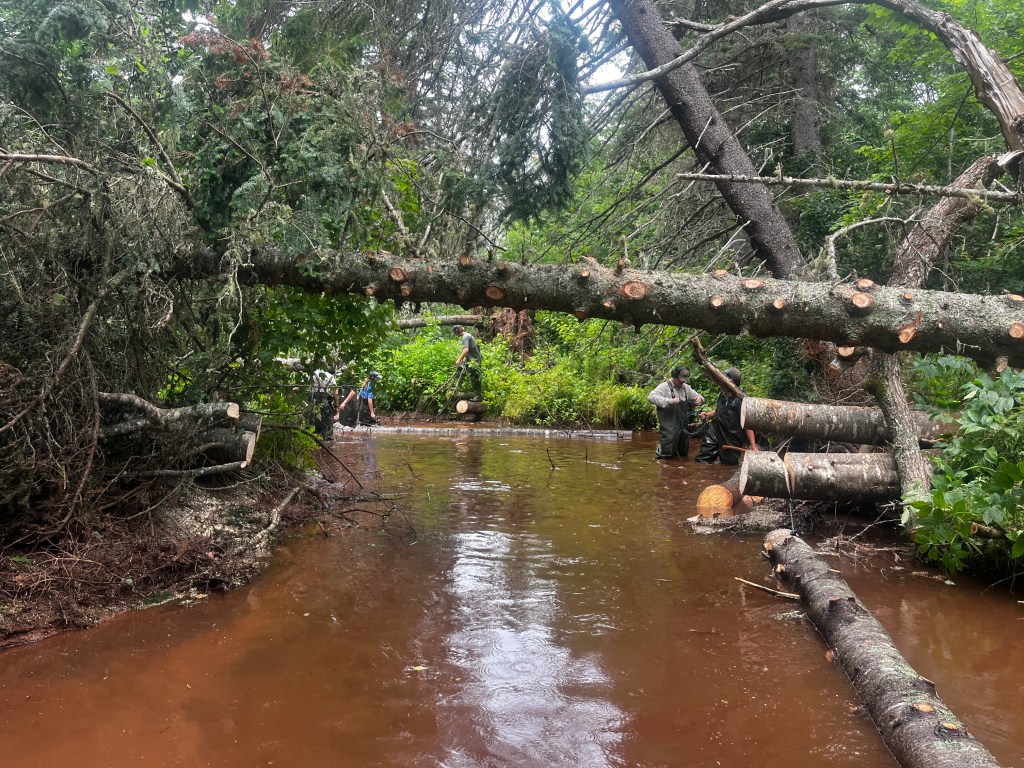
Hurricane Fiona dramatically altered the West River landscape in the fall of 2022. The bulk of work carried out by CQWF in 2023 revolved around addressing these damages. Whether it was reopening access trails or addressing the excessive woody material within the stream channel CQWF crew was ready to tackle any challenge. The total stream maintained in 2023 was lower than in previous years due to the volume of required effort to address blowdowns. It was common for sections to take 3-4 times longer than normal due to the extensive damage. However, CQWF took this as an opportunity to turn these damaged areas back into productive habitats. Woody material plays an essential part in our river systems and properly managing this habitat aspect is important. Turning problematic woody material into productive habitat is a process CQWF has refined over the years. Brush mats and salmonid cover structures are techniques CQWF utilizes in order to accomplish set-out restoration goals. In total, 149 cover structures and 77 brush mats were constructed in 2023 and 30.5 km of stream was maintained.
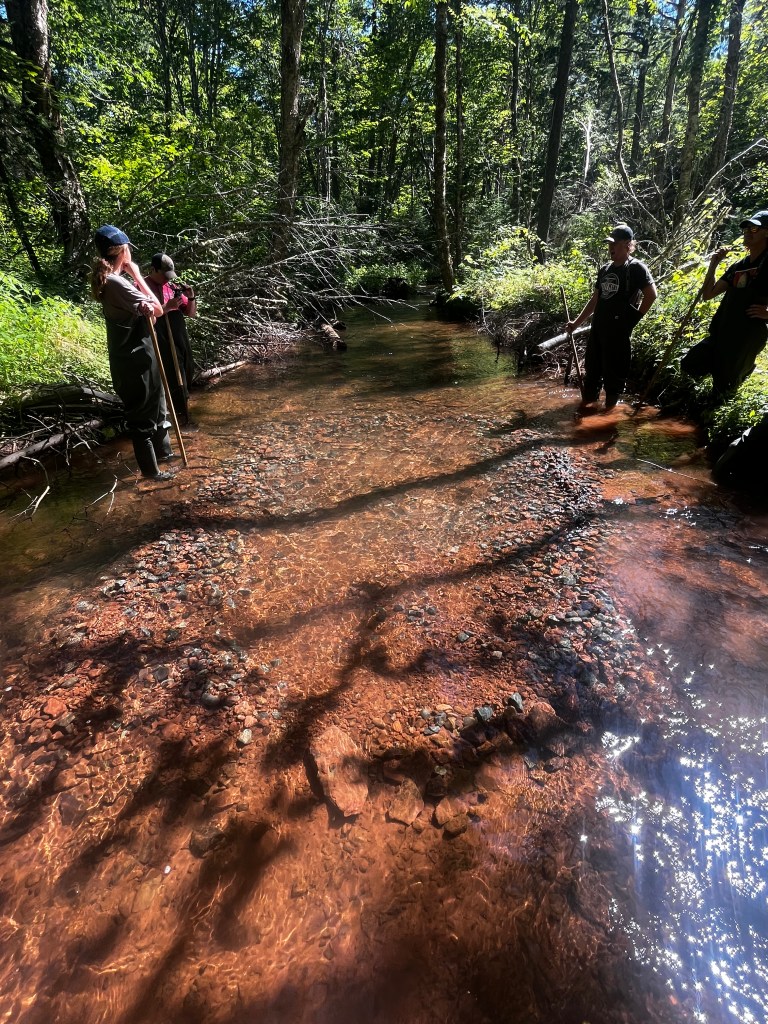
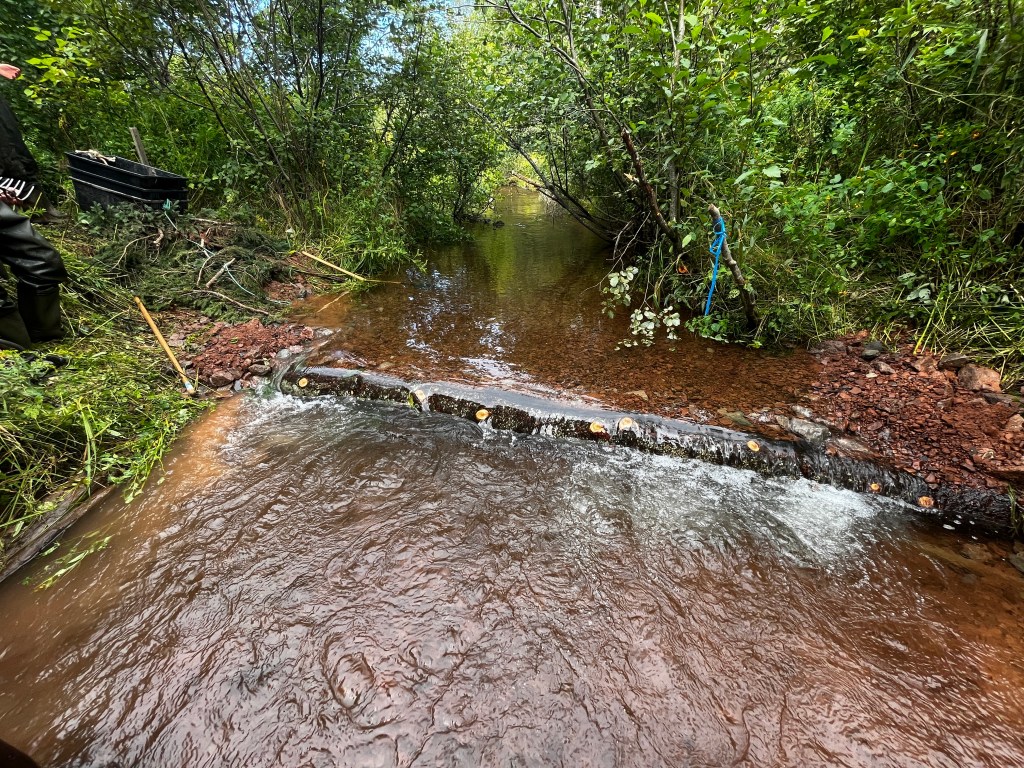
Funding was provided by The Foundation of Conservation for Atlantic Salmon to improve spawning habitat on the West River along a reach of the river in Green Bay. The goal was to install an ideal spawning substrate in combination with structures to create preferred spawning conditions. This occurred at 5 sites. Another major project aspect was to produce a technical report that characterized Atlantic salmon spawning habitat. The report measured variables at 50 sites and used redd survey data to determine which sites are preferred by salmon when spawning in an attempt to delineate common variables. A few variables measured included water velocity, water depth, and substrate size. Spawning habitat enhancement occurred at a total of 54 sites. These activities included raking the substrate to remove fine sediments, installing ideal-sized substrates (smooth fist-sized rock), and creating “V” structures to provide ideal flow characteristics.
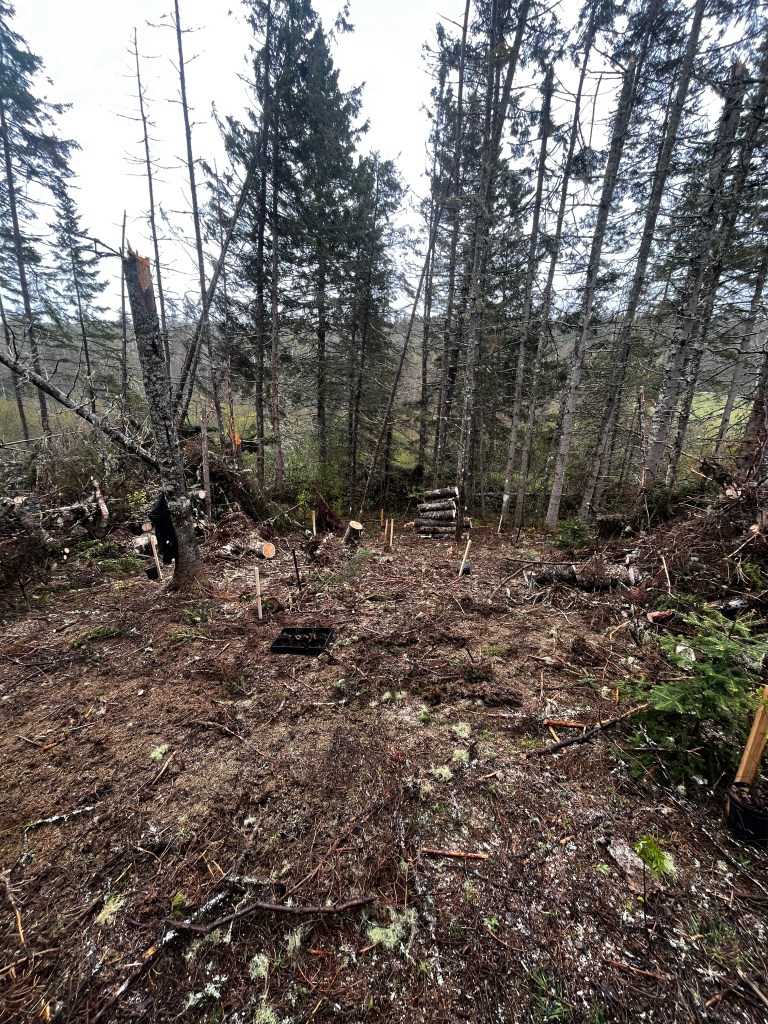
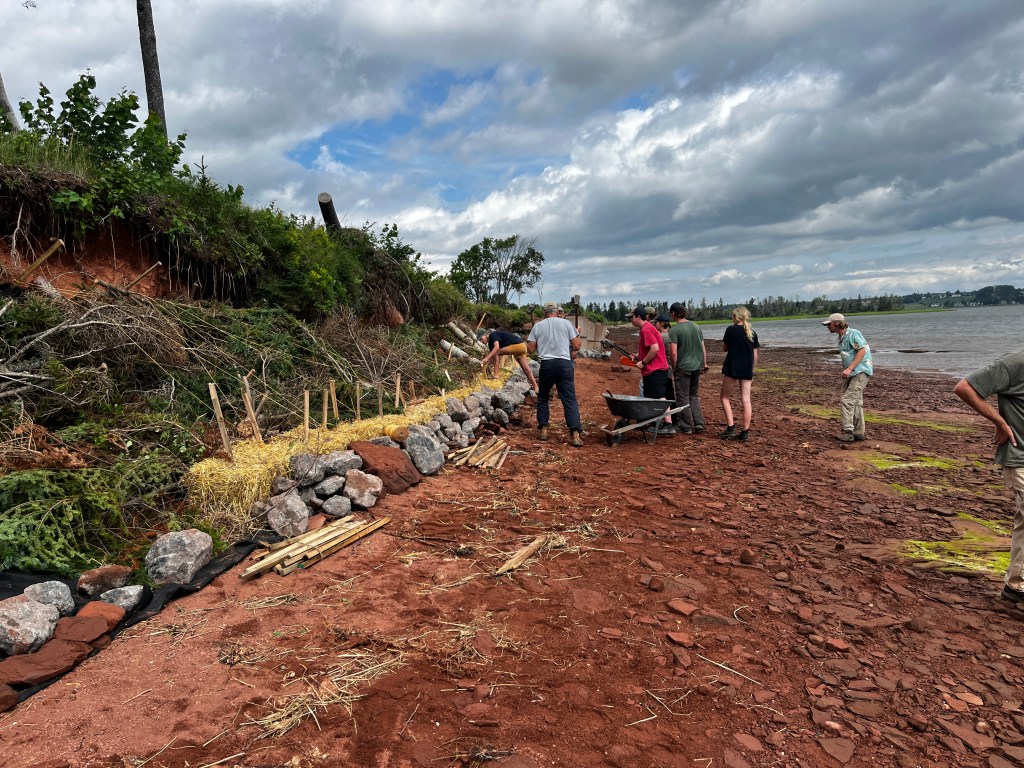
A new project that CQWF undertook in 2023 was a living shoreline project. This involved stabilizing 150 ft of shoreline by using natural components rather than traditional rock armoring. Bales of hay, brush from trees, small boulders, and filter fabric were used to help stabilize the shoreline and reduce the rate of erosion. The main goal was to stabilize the toe of the bank and as the bank erodes the materials will capture sediment and slope the bank to eventually naturalize. Another new activity our group took part in this year was beach cleanup. We covered a large portion of the south shore coastline on our watershed and collected washed-up debris. An approximate 250 lb of garage was collected!
Monitoring activities are summarized in our technical reports which are available on our website and include redd surveys, electrofishing surveys, and water quality results. These reports provide insight into measured metrics and habitat indicators that we incorporate into our management decisions.
The work we accomplished during our field season wouldn’t be possible without certain partner collaboration and financial funding support. The following are partners and programs we would like to acknowledge:
- The Foundation of Conservation for Atlantic Salmon
- Abegweit Biodiversity Enhancement Hatchery
- Canada Summer Jobs Fund
- Department of Communities Land and Environment
- Department of Fisheries and Ocean
- Department of Transportation Infrastructure and Energy
- Parks Canada
- Post-Secondary Student Support Program
- Habitat Stewardship Program
- Jobs for Youth Program
- PEI Wildlife Conservation Fund
- Along with other Watershed groups and many individuals who donated their time and knowledge!




 Central Queens Branch of the PEI Wildlife Federation